
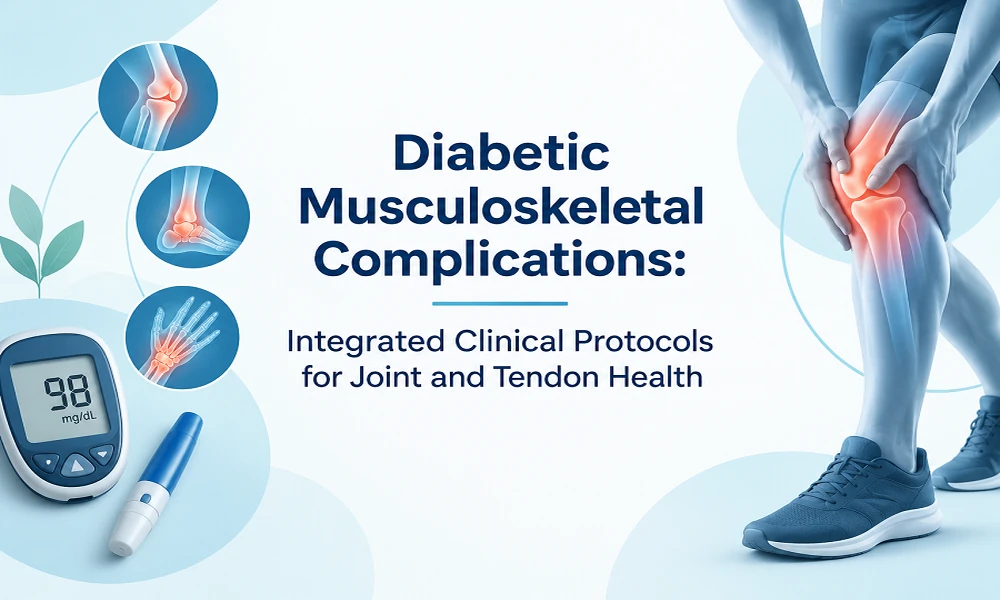
Diabetes mellitus is widely recognized for its microvascular and macrovascular impacts on cardiovascular, renal, and retinal systems. However, its profound degradation of the musculoskeletal system remains one of the most underdiagnosed and debilitating aspects of chronic hyperglycemia. Persistent metabolic dysfunction systematically compromises collagen integrity, microvascular blood supply to connective tissues, and cellular repair mechanisms throughout the body’s structural framework.
When patients present with chronic joint stiffness, progressive tendon degeneration, nerve entrapment, or delayed bone healing, addressing surface mechanical symptoms with local analgesics alone yields incomplete long-term outcomes. Achieving structural recovery requires a synchronized care model. Accessing a skilled orthopedic doctor near me to manage local mechanical integrity alongside a dedicated endocrinologist dubai to regulate metabolic pathways provides the necessary clinical framework to arrest tissue degradation, preserve mobility, and promote tissue regeneration.
The Pathophysiological Mechanism: Advanced Glycation End-Products (AGEs)
To understand why diabetic musculoskeletal complications are so persistent, one must examine the biochemical alteration of connective tissue under chronic hyperglycemia. The central driver of joint and tendon pathology in diabetic patients is the accumulation of Advanced Glycation End-Products (AGEs).
1. Collagen Cross-Linking and Tissue Stiffness
When blood glucose levels remain elevated, glucose molecules spontaneously bind to proteins without enzymatic regulation-a process known as non-enzymatic glycation. In collagen-rich structures such as tendons, ligaments, joint capsules, and articular cartilage:
- Structural Alteration: AGEs form rigid chemical cross-links between adjacent collagen fibers, altering the tissue’s natural elasticity.
- Loss of Pliability: Tendons and joint capsules lose their capacity to stretch and absorb mechanical loads during regular movement, becoming brittle and highly susceptible to micro-tearing under standard physiological stress.
2. Microvascular Hypoxia and Impaired Healing
Diabetes causes microvascular changes that reduce capillary blood flow to periarticular structures. Because tendons and ligaments already possess limited blood supply (hypovascularity), further vascular compromise creates localized tissue hypoxia. When micro-trauma occurs, reduced nutrient and oxygen delivery inhibits normal cellular repair, leading to chronic tendinopathy, localized necrosis, and persistent inflammation.
Primary Diabetic Musculoskeletal Pathologies
The clinical manifestation of diabetes across joints and tendons spans several distinct orthopedic conditions that require specialized diagnostic mapping and early intervention.
1. Charcot Neuroarthropathy (Charcot Foot)
A severe, bone-destroying complication triggered by a combination of diabetic neuropathy and altered micro-vascular blood flow. Nerve damage blunts normal pain sensation, allowing patients to continue walking on micro-fractured bones within the foot. Over time, this leads to complete structural collapse of the foot arch, severe joint dislocation, and irreversible skeletal deformity. Early detection via temperature differential checks and offloading immobilization is critical to prevent amputation.
2. Adhesive Capsulitis (Frozen Shoulder)
Diabetic patients experience adhesive capsulitis at a rate significantly higher than the general population, with conditions often presenting bilaterally and proving resistant to standard physical therapy. Glycation of the glenohumeral joint capsule leads to severe thickening, contracture, and restriction of active and passive shoulder movement.
3. Diabetic Cheiroarthropathy and Dupuytren’s Contracture
- Diabetic Cheiroarthropathy (Diabetic Hand Syndrome): Characterized by waxy, thickened skin and flexor tendon restriction in the hands, preventing patients from pressing their palms flat together (positive “prayer sign”).
- Flexor Tenosynovitis (Trigger Finger): Thickening of the flexor tendon sheath creates mechanical catching or locking as the tendon slides through the A1 pulley ring in the palm.
The Dual-Care Clinical Protocol: Metabolic Control & Orthopedic Repair
Effectively treating diabetic joint and tendon disorders requires addressing both the internal biological environment and the external mechanical structures.
Phase 1: Metabolic Stabilization (Endocrinological Focus)
Without tight glycemic regulation, orthopedic interventions face high failure rates due to ongoing tissue glycation and impaired wound healing.
- Glycemic Optimization: Target HbA1c control reduces the rate of new AGE formation within connective tissue matrices.
- Metabolic Anti-Inflammatory Management: Utilizing metabolic agents like GLP-1 receptor agonists or SGLT2 inhibitors helps reduce systemic low-grade inflammation that exacerbates joint degradation.
- Lipid and Microvascular Support: Optimizing lipid profiles improves peripheral micro-circulation, ensuring essential nutrients reach healing tendons.
Phase 2: Targeted Structural Rehabilitation (Orthopedic Focus)
Simultaneously, local mechanical integrity must be restored through customized orthopedic protocols that avoid unnecessary tissue trauma.
- Non-Invasive Regenerative Therapies: Extracorporeal Shockwave Therapy (ESWT) and Platelet-Rich Plasma (PRP) injections stimulate localized angiogenesis (new blood vessel growth) and collagen remodeling in chronic tendinopathies without damaging fragile tissues.
- Custom Orthotics and Offloading: For early-stage Charcot foot or tendonitis, custom total-contact casts or specialized orthotic boots redistribute pressure away from vulnerable bony prominent points.
- Minimally Invasive Decompression: When conservative management fails, micro-surgical releases (such as trigger finger pulley release or endoscopic capsular release) restore mechanical motion with minimal operative trauma.
Standard Orthopedic Care vs. Integrated Metabolic-Orthopedic Protocols
| Clinical Parameter | Isolated Orthopedic Intervention | Integrated Endocrinological & Orthopedic Protocol |
| Primary Focus | Symptomatic joint pain relief | Resolution of underlying tissue glycation & mechanical repair |
| Healing Velocity | Delayed (Impaired by ongoing hyperglycemia) | Accelerated (Optimized vascular & cellular environment) |
| Recurrence Rate | High (Uncontrolled AGE accumulation persists) | Low (Sustained glycemic & metabolic stabilization) |
| Surgical Risk Profile | Higher risk of infection & non-union | Mitigated (Pre-operative HbA1c & metabolic clearance) |
Conclusion: Restoring Mobility Through Clinical Synergy
Musculoskeletal complications from diabetes can severely impair mobility, reduce independence, and decrease overall quality of life. Expecting local anti-inflammatory injections or physical therapy to resolve joint conditions without addressing underlying blood sugar levels leads to temporary relief and ongoing structural damage.
The path to long-term joint and tendon health lies in an integrated approach. By combining the internal metabolic expertise of an endocrinologist dubai with the structural diagnostics and targeted interventions of an orthopedic doctor near me, patients secure a comprehensive treatment model. This dual strategy stops progressive tissue glycation, restores joint function, and protects long-term skeletal health.