
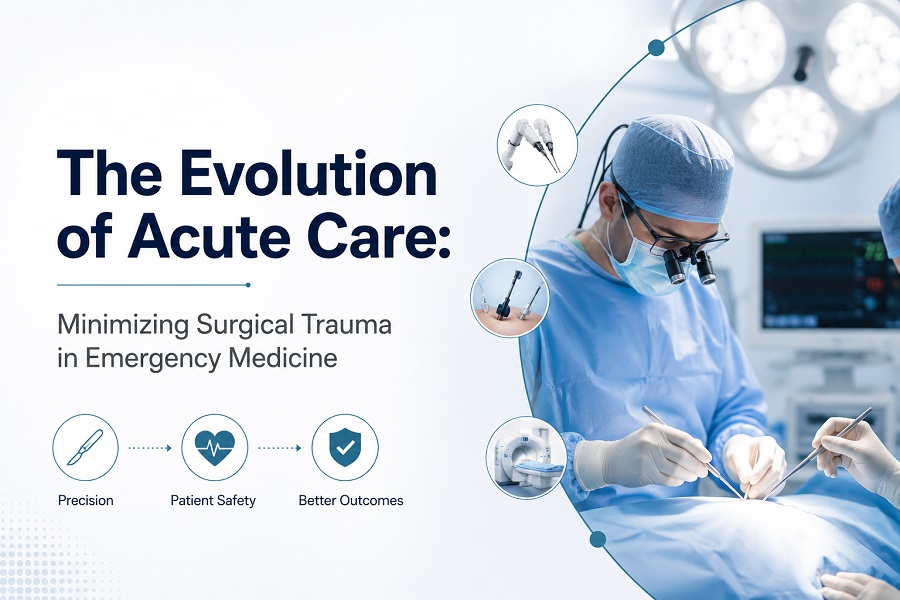
Acute abdominal emergencies demand swift, decisive clinical intervention to prevent systemic complications. For generations, the medical community approached conditions like an inflamed appendix with a reactive, standard surgical framework. However, as we progress through 2026, the intersection of advanced surgical engineering and a deeper understanding of molecular triggers is redefining the patient journey.
The integration of precision technology, particularly the rapid adoption of robotic surgery within emergency medicine, represents a significant leap forward. By moving past traditional, multi-inch incisions, modern healthcare networks—such as Aster DM Healthcare—are setting a new global standard. This modern paradigm ensures that treating acute internal inflammation no longer requires extensive external tissue disruption.
The Biological Catalysts: Analyzing Appendicitis Causes
To understand why precision in the operating theater is so vital, one must examine the complex pathophysiological mechanisms that characterize appendicitis causes. The appendix is a narrow, blind-ended pouch sprouting from the cecum. While historically dismissed as vestigial, contemporary immunology identifies it as a specialized reservoir for the gut microbiome and a key player in mucosal immunity.
Inflammation occurs when the appendiceal lumen becomes obstructed, an event driven by several distinct factors:
-
Fecaliths and Appendicoliths: The most frequent mechanical triggers are calcified fecal deposits or hardened stool stones that wedge themselves into the narrow opening of the appendix.
-
Lymphoid Hyperplasia: The submucosa of the appendix is rich in lymphoid tissue. When the body fights off a remote viral or bacterial infection (such as a standard upper respiratory or gastrointestinal bug), this lymphoid tissue can swell dramatically, sealing the appendiceal lumen from the inside.
-
Genetic Predisposition and Immune Hyper-Responsiveness: Landmark peer-reviewed genomic studies have confirmed that nearly half of the vulnerability to severe appendicitis is hereditary. Variations in genes like HLX, CTSB, and the Interleukin-6 (IL-6) cytokine pathway dictate the “volume” of the inflammatory response. Patients with high-sensitivity genetic variants experience rapid tissue necrosis and accelerated perforation, transitioning from mild discomfort to an emergency state within hours.
Regardless of the underlying trigger, an obstructed appendix becomes a closed loop. Normal mucosal secretions accumulate, internal pressure spikes, and blood flow is cut off, causing rapid ischemia. Without intervention, the tissue degrades, risking a rupture that spills infectious material into the peritoneal cavity.
Surgical Precision: The Rise of Robotic Surgery in Acute Interventions
When a patient presents with a rapidly developing abdominal infection, removing the organ safely is paramount. While traditional laparoscopy has been the standard of care for decades, robotic surgery is emerging as a powerful upgrade for complex, high-acuity cases.
Operating from a dedicated computer console, the surgeon directs a highly sophisticated multi-arm robotic system (such as the Da Vinci Xi platform) to perform the extraction through minuscule incisions.
1. High-Definition 3D Visualization
Standard laparoscopy provides a flat, two-dimensional view on a monitor, which can limit depth perception. Robotic platforms grant the surgical team immersive, three-dimensional vision magnified up to ten times. This clarity allows surgeons to distinguish between healthy bowel walls and highly inflamed, friable appendiceal tissue, reducing the risk of accidental puncture during dissection.
2. Endowrist Dexterity and Tremor Filtration
Human hands, and even rigid laparoscopic sticks, have natural limitations in tight anatomical spaces like the female pelvis or behind the cecum. Robotic instruments feature wristed joints that rotate 360 degrees, offering degrees of freedom that exceed human anatomy. Furthermore, the system completely filters out micro-tremors, ensuring that every microscopic cut is perfectly steady.
3. Reduced Conversion Rates in Complex Cases
A multi-hospital retrospective cohort study demonstrated that robotic assistance is associated with a significantly lower rate of conversion to open surgery. When dealing with a ruptured appendix complicated by a localized abscess, dense scar tissue, or high patient BMI, the extra dexterity allows surgeons to complete the operation minimally invasively, avoiding a major abdominal incision.
Comparing Minimally Invasive Approaches
The shift toward computer-assisted emergency surgery is backed by distinct clinical differences in performance and recovery metrics:
|
Recovery and Operative Metric |
Traditional Open Surgery |
Standard Laparoscopy |
Advanced Robotic Surgery |
|
Incision Architecture |
Single 5 to 10 cm muscle-cutting incision |
Three 10 to 12 mm rigid ports |
Three 8 mm ultra-small keyhole ports |
|
Visual Field |
Direct sight (restricted by incision size) |
2D Flat monitor projection |
3D High-Definition immersive view |
|
Risk of Complications |
Baseline risk for hernia and infection |
Lower risk than open surgery |
Associated with up to a 66% decreased risk of complications in complex cases |
|
Average Hospital Stay |
3 to 5 days |
24 to 48 hours |
Often less than 24 hours (frequently same-day discharge) |
|
Internal Scars (Adhesions) |
High risk due to tissue handling |
Moderate risk |
Exceptionally low due to micro-precision tracking |
Clinical Infrastructure: The Standard in Modern Hospitals
Executing high-tech emergency care requires a seamless hospital infrastructure. For major clinical networks like Aster DM Healthcare, integrating robotic assistance into acute general surgery involves coordinating multiple specialized departments:
-
24/7 Diagnostics and Rapid Triage: Emergency departments use high-resolution, contrast-enhanced CT scans and advanced white blood cell profiling to confirm the diagnosis within minutes of admission, mapping out the precise orientation of the appendix before the patient enters the operating room.
-
Dedicated Robotic Surgical Suites: Top-tier hospitals maintain fully sterilized robotic consoles on standby. This allows on-call consultant surgeons to transition a patient from the emergency room to a robotic suite without operational delays.
-
Enhanced Recovery After Surgery (ERAS) Protocols: Because the tiny 8 mm robotic incisions cause minimal disruption to the abdominal wall, post-operative pain is significantly reduced. This allows clinical teams to implement early-mobilization strategies, encouraging patients to walk within hours of waking up to prevent blood clots and promote rapid bowel recovery.
Summary: A Unified Approach to Surgical Wellness
The future of acute gastroenterology relies on a dual approach: understanding the underlying molecular appendicitis causes while utilizing the extreme precision of robotic surgery. By moving away from the trauma of large incisions, modern medicine ensures that even an unpredictable emergency can be resolved with minimal impact on the body.
Through continuous investment in clinical technology and surgeon training, leading hospital networks are ensuring that patients no longer have to choose between swift emergency care and a gentle, scar-free recovery.