
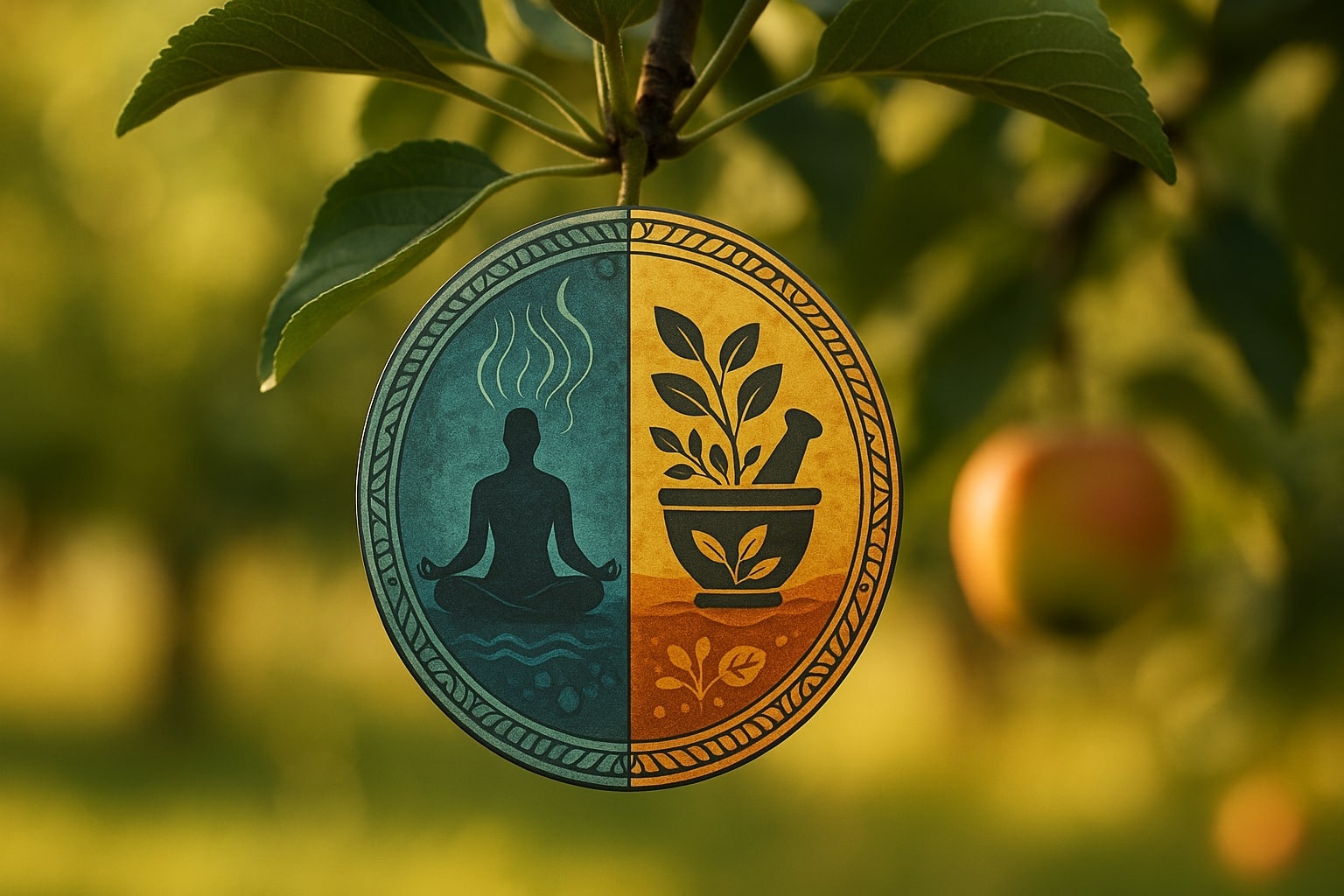
Yoga became a global phenomenon. Ayurveda… didn’t.
At least not at the same scale, and certainly not with the same universal adoption. Yet in the classical Indian sciences, the two are inseparable — Ayurveda is the sister science of Yoga, the operating manual for the body while Yoga refines the mind and spirit. Yoga teaches alignment; Ayurveda teaches maintenance. Yoga is the vehicle; Ayurveda is the fuel system.
So why did only one of them go mainstream?
Simple: yoga fits neatly into a 60-minute class at a gym. Ayurveda requires something the Western world has historically been terrible at — a daily routine.
The Uncomfortable Truth: Ayurveda Demands Rhythm
Ayurveda isn’t about “take this herb” or “follow this fad detox.” At its core, it is behavioral medicine. It asks for consistent sleep, consistent meals, mindful eating, minimal food combinations, morning rituals, evening wind-downs, and — above all — attention to digestion, what Ayurveda calls agni.
This is where Ayurveda crashed head-first into modern Western culture.
For decades, the average weekday looked like this:
- Wake up late because you stayed up late.
- Sit in traffic.
- Grab coffee and a drive-through breakfast.
- Eat lunch at your desk or in a crowded cafeteria.
- Return home exhausted and pre-order takeout.
- Eat while watching TV and go to bed on a full stomach.
Ayurveda needs structure; modern life turned into improvisational jazz. No surprise which one lost.
The Pandemic Shift: When the World Accidentally Became Ayurvedic
Then something unexpected happened: the world stopped commuting.
During the pandemic, millions of people worked from home. And despite the chaos, something quietly revolutionary occurred:
- People cooked at home — more than any time in recent decades.
- Digestion improved simply because meals were warm, fresh, and unhurried.
- People took walking meetings on Zoom.
- Lunch breaks became “actual breaks,” not a race to whatever was closest.
- Sleep schedules stabilized.
- And for the first time, many people realized how bad their old routine had been.
Remote work unintentionally created the perfect environment for Ayurveda’s core principles: regularity, nourishment, and space.
Why Ayurveda Is Finally Having Its Moment
As hybrid and remote work remain a permanent part of the modern landscape, people now have the flexibility Ayurveda always needed. But knowledge alone isn’t enough. People need structure, prompts, and real-time guidance — something traditional Ayurveda never had the tools to provide at scale.
Enter the new generation with an Ayurveda mobile app.
A well-designed app can:
- Personalize a user’s body type and imbalance
- Deliver a structured dinacharya (daily routine)
- Give reminders exactly when digestion needs support
- Offer simple food rules specific to your constitution
- Track progress and keep people accountable even on busy days
- Bring 5,000 years of digestive intelligence into a world run by calendars and notifications
For remote workers, this is seamless. For commuters, this is rescue.
Ayurveda didn’t fail to spread because it lacked wisdom — it simply lacked compatibility with the old lifestyle. Now the lifestyle has changed. Technology has matured. And people are finally ready to reclaim control of their digestion, metabolism, and energy with the support of intelligent, structured tools.
Yoga may have gotten the early spotlight, but Ayurveda is stepping onto the stage now — right when the world is finally prepared to practice it. CureNatural simplifies the entire process of integrating Yoga with Ayurveda, giving you practical, personalized routines you can actually follow. If you want a clear, modern path to learn Ayurveda and bring these sister sciences into daily life, visit CureNatural to get started.